
16/05/2026
Building a Shopify store is easy. However, turning visitors into customers is the real challenge.
A high-converting Shopify store does more than look good. It helps turn visitors into paying customers and increases overall sales. However, many online stores fail because they focus only on design and ignore user experience, speed, SEO, and trust.
In this blog, I will explain my complete step-by-step process for building a high-converting Shopify store. From choosing the right theme to optimizing product pages, you will learn the exact methods I use to create stores that drive real business growth.
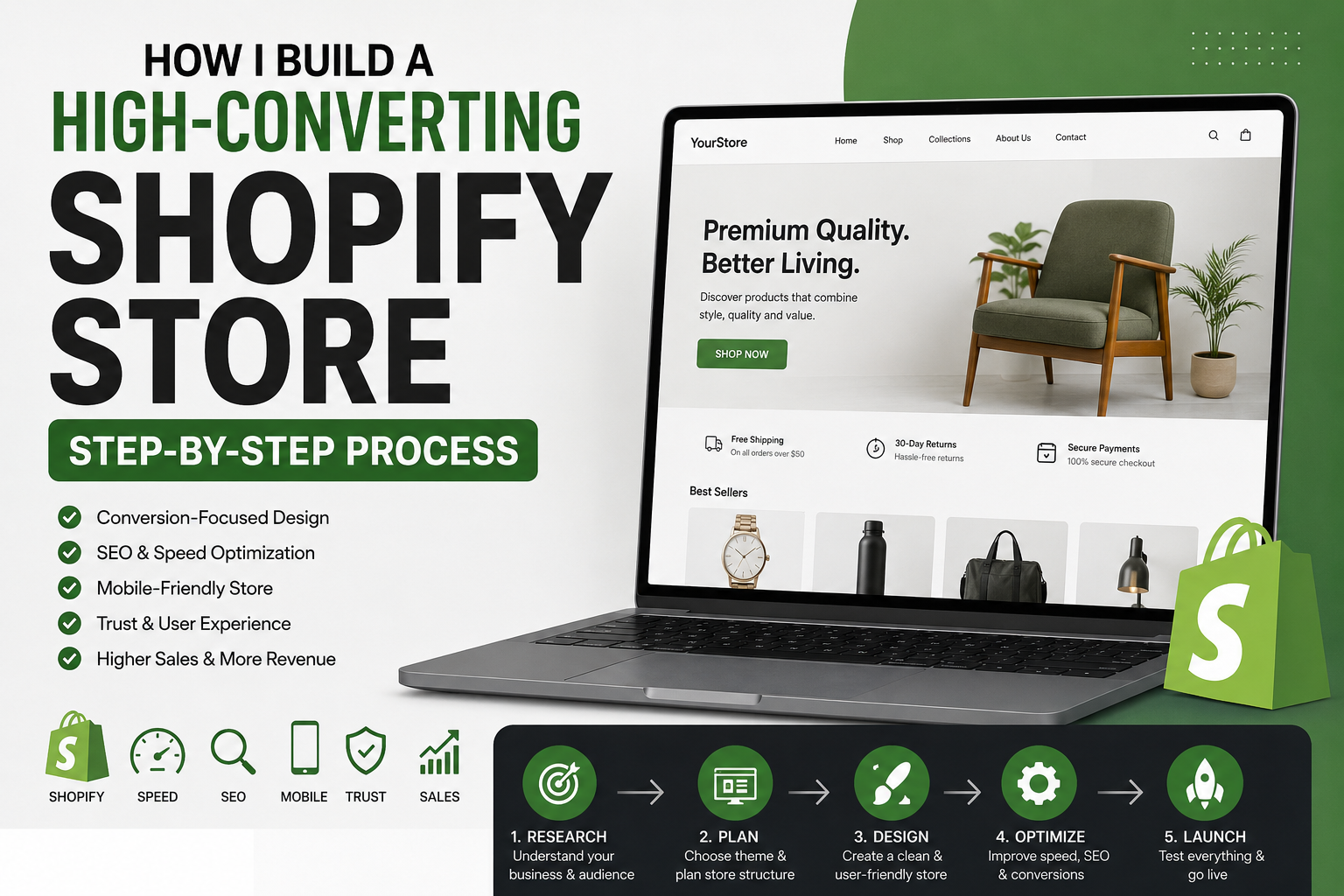
Before starting any design or development work, I first understand the business model and customer behavior.
I analyze competitor stores to identify:
This research helps create a conversion-focused structure instead of a generic website.
The Shopify theme plays a huge role in conversion rates.
A slow theme can hurt trust. As a result, visitors may leave your store quickly.
Most users shop from smartphones, so the store must work perfectly on mobile devices.
A fast website improves:
The product pages should be easy to scan and visually appealing.
I choose themes that allow easy customization without affecting performance.
Some themes I frequently use include:
These themes are lightweight, modern, and optimized for conversions.
A confusing website structure can kill conversions.
That’s why I organize the store strategically.
The homepage should immediately explain:
Well-organized collection pages improve navigation and help customers find products quickly.
This is the most important part of the store.
A high-converting product page includes:
This page builds trust and creates emotional connection with visitors.
A professional contact page improves credibility.
Website speed is very important. In fact, a slow store can reduce sales.
Even a 1-second delay can reduce conversions significantly.
Large image files slow down the website.
I optimize:
Too many Shopify apps can make the store heavy and slow.
I only install essential apps.
Custom coding should be optimized for performance.
Images and videos load only when needed, improving initial page speed.
A beautiful store is useless if customers cannot find it on Google.
That’s why SEO is included from the beginning.
I optimize:
Instead of copying manufacturer descriptions, I create:
Every image includes:
I connect:
This improves SEO and user engagement.
Most conversions happen on product pages.
That’s why I spend extra time optimizing them.
Customers want multiple angles and zoom functionality.
Buttons like:
must be highly visible.
I add:
Instead of only listing features, I explain:
Examples:
These elements encourage faster purchasing decisions.
Apps can improve functionality and conversions when used correctly.
Apps that recommend related products increase average order value.
These apps help recover lost sales automatically.
Customers buy from stores they trust.
Trust-building elements are essential for conversion optimization.
Displaying trusted payment methods improves confidence.
Real customer reviews increase social proof.
I make sure stores include:
Consistent colors, fonts, and visuals create a premium brand image.
Today, most Shopify traffic comes from mobile devices.
That’s why mobile optimization is critical.
Pages must load quickly on mobile networks.
Menus should be simple and user-friendly.
Buttons should be easy to tap.
The fewer steps in checkout, the better the conversion rate.
Launching the store is only the beginning.
Continuous optimization is what improves long-term performance.
Using tools like:
I monitor:
I test:
Small changes can create big improvements in sales.
Aggressive popups annoy users and increase bounce rates.
Heavy themes and unnecessary apps reduce performance.
Weak descriptions fail to convince customers.
Users should find products easily.
Without reviews and policies, customers hesitate to buy.
Building a high-converting Shopify store is not just about design. It requires strategy, SEO, speed optimization, mobile responsiveness, and customer psychology.
By following a structured process, businesses can create Shopify stores that attract traffic, build trust, and generate consistent sales.
Whether you are launching a new ecommerce brand or improving an existing store, focusing on user experience and conversion optimization will always deliver better results.
If you need a professional Shopify or WordPress developer to create a fast, SEO-friendly, and conversion-focused ecommerce website, feel free to contact me today.
Let’s build a store that not only looks amazing but also drives real business growth.